Guild Wars, But Make It Decentralized: How Gen Z Is Ditching MMOs and Building Their Own Gaming Empires
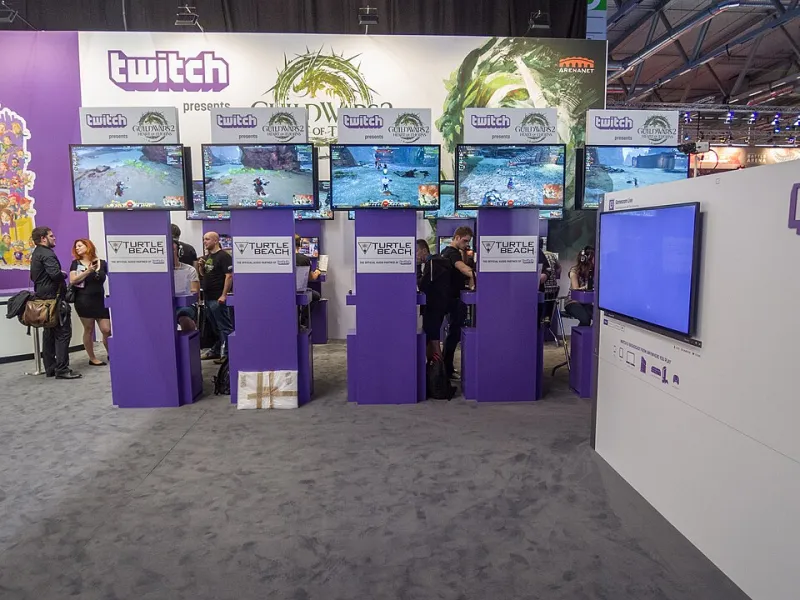
Photo: Dronepicr, CC BY 3.0, via Wikimedia Commons
Somewhere between the third time World of Warcraft changed its loot system and the moment a major MMO studio announced it was pivoting to battle passes, something snapped in the collective brain of the under-25 gaming demographic. Not loudly. Not with a manifesto. Just quietly, methodically, and with an impressive amount of organizational energy that would make a startup founder jealous.
Gen Z gamers aren't quitting gaming. They're quitting your game. And they're building their own thing instead.
The Old Guild Model Was Already Cracked
For anyone who came up playing MMOs in the 2000s and early 2010s, the guild was everything. It was your social life, your progression system, your drama source, and occasionally your first real experience with organizational politics. You farmed raids together, you split loot according to rules someone invented in a forum post, and you trusted that the guild leader — who had, at minimum, 40 hours a week to dedicate to this — would keep the whole operation running.
But here's what that model actually was, stripped of nostalgia: a volunteer labor arrangement that generated value for a game studio that owned everything. The items, the currency, the world, the social graph. All of it. You put in the hours, you built the community, and when the servers went dark or the studio pivoted to mobile, you got nothing except memories and maybe a screenshot folder.
Gen Z, having watched this happen to their older siblings' favorite games, looked at that arrangement and said: hard pass.
Enter the Gaming DAO — Yes, This Is Actually a Thing Now
A gaming DAO (Decentralized Autonomous Organization, for anyone who just wandered in from a non-crypto corner of the internet) is essentially a member-owned collective that uses blockchain-based governance to make decisions about shared resources, strategy, and revenue distribution.
In plain English: it's a guild where the members actually own a piece of the operation, vote on how things run, and get paid when the collective earns money.
This isn't theoretical. Projects like Yield Guild Games pioneered the model, and a growing ecosystem of smaller, more focused gaming collectives has emerged in its wake — each one targeting specific game genres, regional communities, or particular blockchain ecosystems.
One such project, a mid-sized gaming DAO focused on competitive strategy titles, shared some numbers with us on condition of anonymity (the crypto world loves its pseudonymity). Their 800-member collective generated approximately $340,000 in combined tournament winnings, NFT trading profits, and sponsored content revenue over an 18-month period. After operating costs, members received quarterly distributions based on their contribution scores — a metric tracked on-chain that accounts for hours played, tournament participation, and content creation.
"The biggest thing for me was that I could see exactly where the money went," said one member, a 22-year-old from Phoenix who goes by the handle Vexlore online. "Every transaction is on the blockchain. There's no guild leader skimming off the top. It's just... transparent in a way that normal guilds never were."
NFT-Gated Access: Elitist Gatekeeping or Sustainable Economics?
Here's where it gets spicy, because the NFT-gated access model is genuinely controversial even within the gaming DAO community.
Many of these collectives require prospective members to hold a specific NFT — essentially a membership pass — to participate in governance, revenue sharing, and premium activities. Floor prices for these passes vary wildly, from a few dollars in smaller communities to several hundred in established ones. Critics argue this recreates the same economic gatekeeping that these communities are supposedly rebelling against.
The counter-argument, made by several DAO founders we spoke with, is that the NFT pass serves a function that a traditional subscription fee doesn't: it's an asset. If you decide to leave the community, you can sell your pass. Your membership has liquidity. Compare that to the $15 a month you sank into an MMO subscription for three years — that money is just gone.
"It's more like buying into a co-op than paying for a streaming service," explained one DAO co-founder who runs a gaming collective with around 1,200 active members. "When you buy a membership at a co-op grocery store, you get dividends if the store does well. That's the vibe we're going for."
Whether that framing holds up at scale is still being tested. But for communities in the 500-to-2,000 member range, the economics appear to be working.
Why Younger Players Actually Prefer This — Beyond the Money
It would be reductive to frame this entirely as a financial calculation, because the appeal of decentralized gaming guilds isn't purely economic. There's a cultural dimension that's equally important.
Gen Z has grown up with platform instability as a default condition. Apps die. Games get shut down. Servers go offline. Algorithms change and kill creators overnight. The response to that instability isn't panic — it's diversification and ownership. If you own the infrastructure, or at least a meaningful stake in it, you're less exposed when the platform shifts.
There's also the governance piece, which sounds boring until you realize it means players actually vote on which games the collective focuses on, how tournament winnings get split, and whether to bring in a brand partnership. For a generation that has watched game studios make increasingly player-hostile decisions with zero accountability, having a genuine vote is genuinely radical.
"I've sent feedback to three different AAA studios over the past five years," said Maya, a 24-year-old gamer and DAO member from Austin. "Never got a response that wasn't an automated email. In my DAO, if I submit a governance proposal, it goes to a vote within a week. That's wild to me. That's what engagement actually looks like."
The Economics of Running a Gaming DAO: It's Not All Moon Math
Let's be honest about the challenges, because this is Baby Pepe Club and we don't do pure hype pieces.
Running a gaming DAO is operationally complex. Smart contract audits cost money. Legal structures for DAOs in the US are still murky — Wyoming and a handful of other states have DAO-friendly legislation, but most collectives are operating in a gray zone. Token governance can get captured by large holders who accumulate voting power. And the bear market of 2022-2023 absolutely wrecked the treasuries of gaming DAOs that held too much of their reserves in volatile assets.
The ones that survived — and some thrived — tended to share a few traits: diversified treasuries (stablecoins mixed with game assets), clear and enforceable contribution metrics, and governance structures that prevented any single member from accumulating outsized influence.
The lesson from the projects that blew up is basically the same lesson from every other crypto disaster: don't let the number go up become the entire strategy.
What This Means for the Future of Gaming Communities
Traditional MMO studios are not blind to this shift. Several major developers have experimented with player council programs and in-game governance mechanics, with mixed results. The fundamental tension — studio needs to monetize, players want ownership — hasn't been resolved by cosmetic governance features.
The gaming DAOs don't need the studios to solve that tension. They're routing around it entirely, building communities that exist across multiple games, multiple platforms, and multiple revenue streams simultaneously.
Is this the future of all gaming? Probably not. Casual players aren't going to buy an NFT pass to play a mobile puzzle game. But for the segment of the gaming population that is deeply invested — financially, socially, and temporally — in their gaming communities, the decentralized guild model offers something the corporate alternative genuinely cannot: a stake in what they're building.
And in an era where every platform is one bad earnings call away from gutting its user experience, owning a piece of your community isn't just idealistic. It's actually kind of smart.
GG, corporate guilds. The players are organizing.