Banned, Booted, and Building Back: How Web3 Gaming Communities Survive the Platform Wars
Photo: Didier Descouens, CC BY-SA 4.0, via Wikimedia Commons
Imagine spending six months building a 40,000-member Discord server — custom bots, daily giveaways, lore channels, the whole nine yards — and then waking up one Tuesday morning to find the whole thing just... gone. No warning. No appeal. Just a cold, corporate "Your server has been removed for violating our Community Guidelines."
For a growing number of Web3 gaming and NFT communities across the US, that nightmare is Tuesday. Discord, Twitch, and even Reddit have quietly ramped up enforcement against crypto-related content over the past two years, leaving thousands of moderators scrambling to relocate their communities to platforms that won't pull the rug from under them. (Yes, we see the irony.)
We talked to several community mods who've been through the deplatforming grinder and emerged — bruised, caffeinated, and somehow still bullish — on the other side.
The Purge Is Real, and It's Not Random
Let's be clear: this isn't just paranoia from people who've watched too many conspiracy theory YouTube rabbit holes. Discord's enforcement of its policies around financial solicitation and "investment schemes" has disproportionately hit NFT and gaming token communities, even ones that are fully above board.
"We weren't even doing anything shady," says Marcus T., a mod who ran a 30,000-member server for a blockchain-based trading card game. "We had KYC'd our team, had a published roadmap, partnered with legit game studios. Then one day — poof. Gone. We think someone mass-reported us as a scam."
That's the double-edged sword here. Because the NFT space has produced genuine scams by the truckload, platforms are trigger-happy with enforcement. Legitimate projects get caught in the crossfire while the actual bad actors just spin up a new server under a different name and keep cooking.
The result? A kind of community Darwinism. The projects with real infrastructure and loyal members rebuild. The cash grabs disappear quietly, which honestly isn't the worst outcome.
Where Do You Go When Discord Ghosts You?
The migration patterns are fascinating. When a major server gets nuked, the community diaspora tends to scatter across a handful of alternative platforms, each with its own vibe and trade-offs.
Telegram remains the cockroach of crypto communication — impossible to kill, slightly chaotic, and beloved by anyone who's ever been in a 3 AM alpha call. It's fast, it's global, and its moderation tools are... let's say "minimal," which cuts both ways.
Guild.xyz has emerged as a darling for Web3-native communities because it lets you gate access based on wallet ownership. Want to join the inner circle? Hold at least one of our tokens. It's community management meets DeFi, and for projects with genuine token ecosystems, it's elegant.
Farcaster and other decentralized social protocols are the ideologically pure option — no central authority can delete your community because there's no central authority. The trade-off is that your grandma (or even your average 22-year-old gamer) has no idea what Farcaster is, so you're building in a smaller pond.
Then there's the old-school option: your own forum or community portal. Several larger NFT gaming projects have gone this route, spinning up custom platforms where they control the infrastructure entirely. It's more expensive and requires actual technical chops, but nobody can ban you from your own house.
Mods Are the Unsung Heroes (and They're Exhausted)
Here's the thing nobody talks about when a big server goes down: the moderators. These are often unpaid or minimally compensated community members who've poured hundreds of hours into building something real, and they're the ones left holding the bag when platforms pull the plug.
"I had 12 mods working under me," says Priya K., who ran a Web3 gaming guild for a popular blockchain RPG. "When we got deplatformed, I had to personally reach out to each of them, explain what happened, and try to keep morale up while simultaneously rebuilding on two new platforms at once. It was genuinely one of the most stressful weeks of my life."
The communities that survive these upheavals tend to be the ones that invested in their mod teams — not just as enforcers, but as genuine community stewards who have real relationships with members. When the platform burns down, those relationships are what you carry out of the fire.
The Mainstream Acceptance Trap
There's a deeper tension here worth naming. Many Web3 gaming projects desperately want mainstream legitimacy — they want to be on Discord, on Twitch, on the platforms where millions of gamers already hang out. But those platforms have terms of service designed for a pre-crypto world, and they're enforced inconsistently at best.
Chasing mainstream platform acceptance can actually make your community more fragile, not less. You're building on rented land, and the landlord can evict you at any time for reasons that have nothing to do with whether you're running a legitimate project.
The communities thriving right now are the ones that treat mainstream platforms as top-of-funnel discovery tools — great for finding new members — while doing their serious community infrastructure work on platforms they actually control or that are structurally resistant to deplatforming.
"Discord is our front door," Marcus explains. "But our real community lives in Guild and on our own forums. If Discord bans us again, we lose the front door. We don't lose the house."
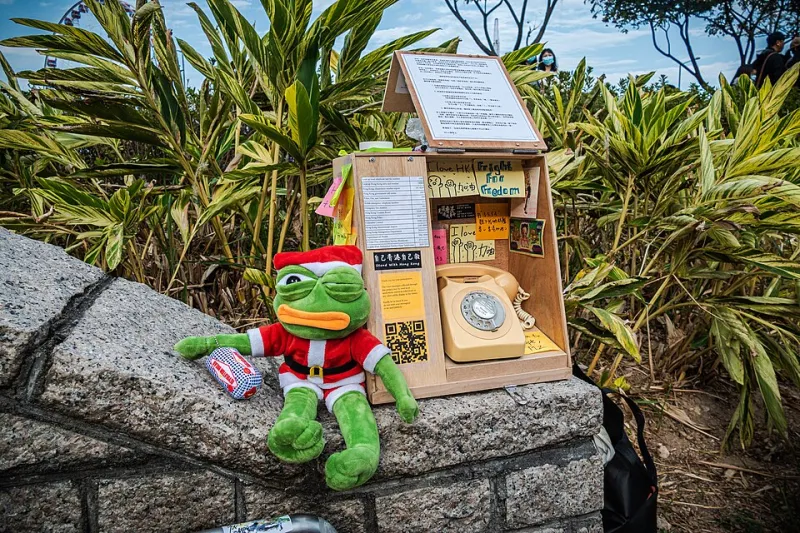
Baby Pepe's Take
Look, getting deplatformed sucks. But in a weird way, it's also a filter. The projects that fold after one ban were probably not going to make it anyway. The ones that rebuild, adapt, and find their people across multiple channels? Those are the communities worth betting on.
If you're building in this space — or just trying to find your tribe — don't put all your community eggs in one corporate basket. Diversify your communication stack the same way you diversify your portfolio. And maybe back up your member list somewhere that Big Tech can't reach.
The ban hammer is real. But so is the community that refuses to stay banned.