From 4chan Outcast to Crypto Crown: The Untold Origin Story of Pepe the Frog
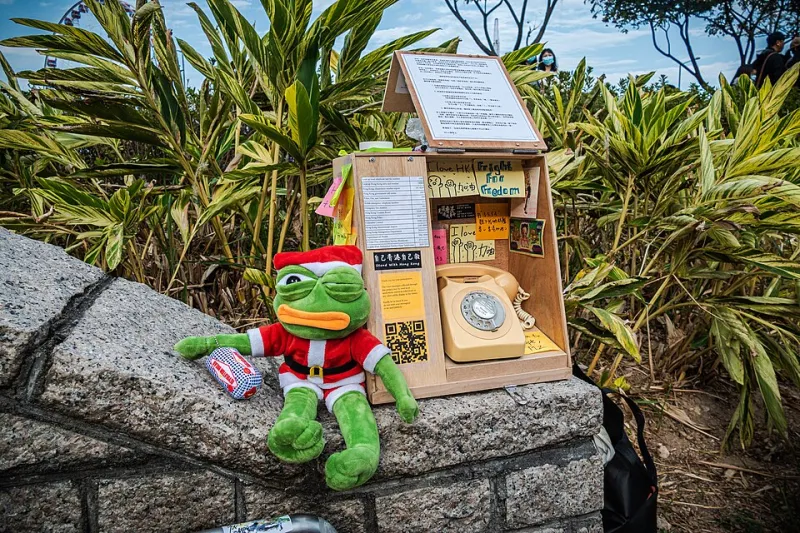
Photo: Studio Incendo, CC BY 2.0, via Wikimedia Commons
If you've spent more than fifteen minutes in any crypto Discord, you've seen him. Smug. Sad. Giggling. Crying while wearing a suit. Holding bags. Buying the dip. Pepe the Frog is everywhere in digital finance culture — a silent mascot for the chaos, the gains, the losses, and the inexplicable joy of watching a cartoon frog become a financial instrument.
But Pepe didn't start here. He started in a chill little webcomic about a group of roommates, drawn by a guy in San Francisco who probably never imagined his creation would one day be minted on the blockchain for thousands of dollars. The story of how that happened is a genuine piece of internet history — and at Baby Pepe Club, it's basically our founding mythology.
Matt Furie's Accidental Icon
Pepe the Frog first appeared in 2005 in Matt Furie's self-published comic Boy's Club, a laid-back, slice-of-life strip about four anthropomorphic animal roommates doing very little of consequence. Pepe's defining moment in that early run was a single panel where, caught peeing with his pants all the way down, he shrugs and says "feels good man." It was absurdist, low-stakes humor that fit perfectly into the early-internet aesthetic of finding comedy in the mundane.
Furie shared the comic on his MySpace blog. It spread quietly. Then, around 2008, Boy's Club pages started showing up on 4chan's /b/ board — the anarchic, anything-goes corner of the internet where memes were forged in the digital equivalent of a blast furnace. The "feels good man" panel was cropped, remixed, and repurposed. Pepe's face became a blank canvas for emotional expression in a space where expressing genuine emotion was considered deeply uncool.
This is where things get interesting.
The Feels Factory: How 4chan Built Pepe's Emotional Range
What made Pepe uniquely suited for meme culture was his face. It's expressive without being specific — that wide-set stare and downturned mouth can read as smug, defeated, hopeful, or devastated depending on context. Anonymous users on 4chan began creating variations: Smug Pepe, Sad Pepe, Angry Pepe. Each variant served as emotional shorthand in a community that communicated almost entirely through image macros and irony.
By the early 2010s, Pepe had migrated from 4chan to Tumblr, Reddit, and eventually Twitter, where he became mainstream enough to appear in tweets from celebrities and athletes. Katy Perry tweeted a Pepe. That was a real thing that happened. For a brief, strange moment, Pepe was just a fun frog that everyone was posting.
Then 2016 happened.
The Controversy Chapter (We're Not Skipping It)
During the 2016 U.S. presidential election, certain corners of the internet weaponized Pepe as a symbol for far-right messaging. The Anti-Defamation League briefly added Pepe to its hate symbol database, a decision that was met with confusion, outrage, and a lot of people explaining that the frog had been around for a decade before any of that. Matt Furie was vocal about his distress — he'd created a character defined by chill vibes, and it had been hijacked for something he found repugnant.
Furie eventually won legal battles against groups misusing his creation, and the broader internet slowly reclaimed Pepe from that association. The character's resilience through that period is actually part of what makes him culturally significant — he got dragged through one of the ugliest moments in recent internet history and came out the other side still standing. Still posting.
Enter Crypto: Rare Pepes and the Birth of Meme Ownership
Here's where Pepe's story takes its most unexpected turn. In 2016 — the same year the mainstream was arguing about what the frog meant — a small community on 4chan's /biz/ board started trading "Rare Pepes." The concept was simple and slightly genius: if internet culture assigns value to memes, why not formalize that? Users created unique, limited Pepe image cards and traded them as if they were collectibles.
The Rare Pepe community eventually built an actual marketplace and, crucially, began minting these cards on the Bitcoin blockchain using the Counterparty protocol. This was 2016. Most people hadn't heard the word NFT yet. But a bunch of anonymous frog traders had already figured out the core thesis: digital scarcity creates digital value, and meme culture creates demand.
Some of those original Rare Pepe cards now sell for hundreds of thousands of dollars. "Homer Pepe," one of the most coveted cards from that era, sold for $500,000 worth of crypto in 2021. A cartoon frog card made by anonymous internet users in 2016 is now a blue-chip digital collectible. The internet contains multitudes.
Why Pepe? Why Not Any Other Meme?
This is the question that cultural analysts, meme historians, and extremely online people have debated for years. Plenty of memes had the same reach — Doge, Wojak, the Distracted Boyfriend. Why did Pepe become the one with staying power in crypto culture specifically?
A few theories hold up under scrutiny. First, Pepe's emotional range makes him infinitely remixable. Unlike Doge, which is locked to a specific feeling (much wow, very excite), Pepe can express the full spectrum of the crypto experience — the euphoria of a 10x, the despair of a rug pull, the manic energy of a bull run at 3 a.m. He's a mirror for whatever the community is feeling.
Second, Pepe has genuine origin lore. He has a creator, a history, a contested cultural journey. That narrative depth makes him feel more like a character than a template — and characters, unlike templates, can be owned in a way that feels meaningful.
Third, and maybe most importantly, Pepe was adopted by the outsider communities that eventually built crypto culture. The overlap between early crypto adopters and the kind of people who spent time on 4chan and early Reddit is significant. Pepe was already their symbol before Bitcoin was a household name.
Meme Ownership and the New Internet History
When someone buys a Rare Pepe NFT or a Baby Pepe token, they're not just buying a digital file. They're buying a piece of a cultural timeline — a verifiable claim on an artifact from the weird, chaotic, generative history of internet culture. That's something genuinely new.
For most of the internet's existence, cultural artifacts were infinitely copyable and therefore owned by no one. Memes spread because nobody could stop them. NFTs introduced the concept of provable scarcity into that equation — not stopping the spread, but creating a layer of ownership on top of it. You can still screenshot a Rare Pepe. But you can't fake the blockchain receipt.
Matt Furie, for his part, has embraced this evolution. He's collaborated on official Pepe NFT projects and continued creating art featuring his most famous character. The frog who started in a MySpace webcomic now lives on the blockchain, in Discord servers, in the name of this very website.
Feels good, man.