Copy the Frog, Miss the Point: Why Every NFT Project That Tried to Clone Pepe Ended Up Looking Pressed
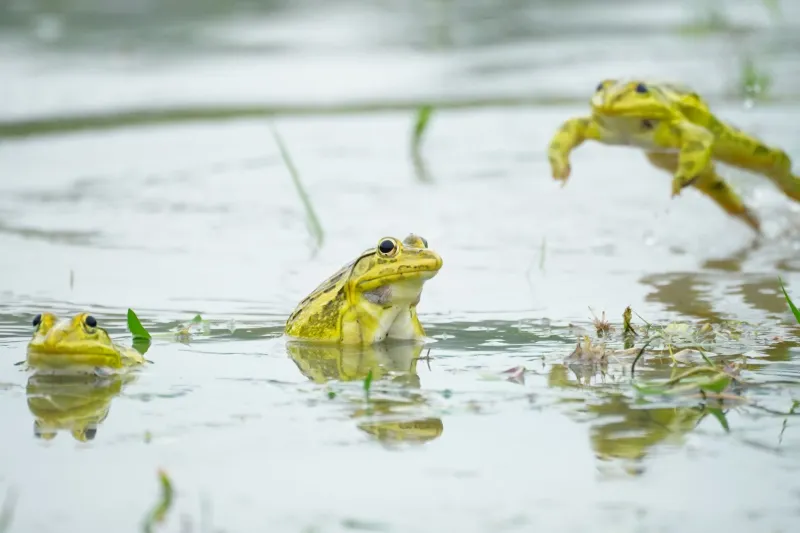
Somewhere out there, in a forgotten Discord server with 47 members and a bot that still posts "gm frens" every morning, lives the corpse of someone's Pepe clone. The floor price is zero. The roadmap was never finished. The founder "stepped back for personal reasons" sometime in Q3 2022. And the PFP collection — 10,000 vaguely amphibian faces with laser eyes and Supreme hats — sits on OpenSea like a digital tombstone.
This is the Pepe Pipeline in action. And almost nobody survives it.
What the Pipeline Actually Is
The Pepe Pipeline isn't a scam playbook, exactly. It's more like a cargo cult — a pattern where founders see the cultural gravity of Pepe the Frog and reverse-engineer what they think made it work. Organic meme energy? Check. A sad/happy/weird emotional range? Check. Vague association with internet outsider culture? Double check. Slap on a mint price, hype it on CT (Crypto Twitter, for the uninitiated), and wait for the magic to happen.
It never happens. Not the way they want.
Pepe didn't become the most versatile meme in internet history because someone planned it. Matt Furie drew a chill frog feeling good about peeing with his pants around his ankles in a 2005 MySpace comic. That's it. That's the origin. No whitepaper. No tokenomics. No VC backing. The character spread because it fit — emotionally, aesthetically, and culturally — into a thousand different conversations happening across forums, imageboards, and eventually every social platform on earth.
You cannot manufacture that. But oh, how people keep trying.
The Three Flavors of Cringe Clones
After watching this space for a minute, the copycat projects tend to fall into three distinct and equally tragic archetypes.
The Aesthetic Thief just wants to look like Pepe. Green frog? Check. Droopy eyes? Check. Meme-adjacent name like "FeelzCoin" or "PepoDAO"? Absolutely. These projects get roasted immediately by anyone who's been in crypto longer than six months because the visual language without the cultural context reads as purely derivative. The community never forms because there's nothing to actually bond over except "we also like Pepe, kind of."
The Forced Organic Project is sneakier and honestly sadder. These teams hire meme creators, seed Reddit threads, pay micro-influencers to post "this feels like early Pepe energy ngl" and genuinely believe that if they simulate grassroots long enough, real grassroots will follow. Sometimes it works for a pump cycle. It never builds a lasting community because the people who show up are there for the price action, not the culture. When the price drops, they leave. And then the Discord is just the bot saying gm to nobody.
The Ideology Grab is the most ambitious and the most delusional. These are projects that try to co-opt Pepe's political and countercultural associations — the whole "reclaimed symbol of resistance" angle — without doing any of the actual cultural work. They slap a frog on a manifesto about decentralization and freedom and wonder why nobody takes them seriously. Pepe's ideological complexity came from years of contested meaning-making across wildly different communities. You can't crowbar that into a mint announcement.
The Projects That Actually Got It Right
Here's the thing though — a small number of communities have genuinely cracked the Pepe formula. Not by copying it, but by understanding the underlying principle: authentic weirdness at the right moment.
CryptoPunks didn't try to be Pepe. They launched in 2017 as a weird experiment on Ethereum when almost nobody was paying attention to NFTs, and the community that formed around them did so organically because the project was genuinely novel and the people drawn to it were genuinely weird in compatible ways. The culture came first. The value followed.
Milady Maker is a more recent and more controversial example, but the cultural stickiness is undeniable. Love it or hate it, that project has a scene — an aesthetic, a set of references, an in-group language that developed through actual community interaction rather than a marketing calendar. It's uncomfortable for a lot of people, which is almost the point. Pepe was uncomfortable for a lot of people too.
Closer to the frog itself, the Pepe NFT ecosystem — particularly the rare Pepes on Counterparty that predate most of the NFT boom — succeeded because the people involved were already deep in both meme culture and early crypto. The intersection was genuine. The collection of rare Pepe cards traded on a blockchain before most people knew what a blockchain was, and the community policing what counted as a "rare Pepe" was doing DAO-style governance before DAOs were a pitch deck staple.
The Actual Blueprint (That Nobody Wants to Hear)
So what's the real lesson from the Pepe Pipeline? It's uncomfortable: you can't build a Pepe. You can only be in the room when one happens.
The communities that have Pepe-level cultural staying power didn't set out to create cultural staying power. They set out to do something weird and specific and true to themselves, and they found other people who resonated with that specific weirdness. The meme energy was a byproduct of genuine human connection, not a feature in a product roadmap.
This means the practical advice for any NFT or crypto community builder is almost the opposite of what most growth playbooks recommend. Don't optimize for virality. Don't study what worked before and try to replicate the surface features. Don't hire a meme team before you have a real community. Find the actual weird thing that your actual weird founding members care about, and go extremely hard on that specific thing, and see who shows up.
Some of them will be frogs. Some won't. The ones who stay are your people.
The Frog Endures
Pepe is still here. After nearly two decades, multiple waves of co-optation, a legal battle, a documentary, a crypto token with a multi-billion dollar market cap, and approximately ten million inferior imitators, the frog persists. Not because anyone is managing the brand. Because the emotional truth at the center of it — that feeling of being a little sad, a little happy, a little weird, and kind of okay with all of it — is genuinely universal.
The projects that will still matter in ten years are the ones that find their version of that truth. Not Pepe's truth. Their own.
Everyone else is just another frog in the graveyard Discord, waiting for a bot to tell them good morning.